

Webinars

Seeking Online Program Proposals – All Topics
Do you have expertise you'd like to share? CSHEMA is seeking presenters for our online learning programs. Share your knowledge with colleagues by submitting an application to host a webinar.
Did you attend a recent webinar and want to leave feedback? Submit here!
Upcoming Webinars
Strengthening Campus Safety: Contemporary Approaches to Workplace Violence Prevention
Date & Time: October 14, 2026 | 1:00 PM Eastern / 12:00 PM Central
Speaker: Gregory Anyiador (University of Texas at Dallas)
Contact: Gregory Anyiador (This email address is being protected from spambots. You need JavaScript enabled to view it.)
Continuing Education: Live attendance awards 0.1 Continuing Education Units (CEUs).
This session explores comprehensive strategies for preventing workplace violence on campus, including threat assessment, emergency response planning, and fostering a culture of safety. Learn practical approaches to protect faculty, staff, and students in higher education settings.
Understanding Chemical Fume Hoods, Exposure Control Devices, and Laboratory HVAC Systems
Date & Time: October 29 and November 5, 2026 | 2:00–4:00 p.m. EST each session
Location: Live via Zoom
Please Note: Registering for Part 1 (October 29) automatically registers you for Part 2 (November 5). You do not need to register separately for the second session.
Session Description: This two-part course explores how chemical fume hoods, exposure control devices, and laboratory HVAC systems protect personnel from airborne hazards. Participants will review applicable ANSI/AIHA, OSHA, ACGIH, and NFPA guidance and learn why ventilation should be based on laboratory hazards and activities—not air changes per hour alone. The course will also cover airflow principles and methods for evaluating hood performance.
Schedule:
- October 29: Event details & registration
- November 5: Event details (Auto-registered upon completion of Oct 29 registration)
- 2:00–4:00 p.m. EST each session
- Live via Zoom
Registration Fees: Fee includes both sessions.
| Registration Type | Fee |
|---|---|
| Live (Zoom) | $225 |
| CSHEMA Academy | $200 |
Learning Outcomes: Participants will be able to:
- Explain how fume hoods and other devices control airborne hazards.
- Identify key laboratory ventilation standards and guidance.
- Describe the limitations of using air changes per hour as the sole design basis.
- Explain laboratory HVAC and directional airflow principles.
- Evaluate hood performance through face velocity, containment, and flow visualization testing.
Key Takeaways:
- Ventilation should be based on laboratory hazards, materials, and activities.
- Fume hood performance depends on design, airflow, sash position, and work practices.
- Hood selection must match the intended use and hazards.
- Routine testing and maintenance help maintain reliable containment.
Previously Featured Webinars
CSHEMA Town Hall
Date: September 30, 2026
Location: Zoom
Access Recording
An Interdisciplinary Approach to Lithium-Ion Battery Safety
Date: September 9, 2026
Speakers: Researchers from UL Research Institute (Chemical Insights, Electrochemical Safety, and Fire Safety)
Essential Industrial Hygiene for Semiconductor Research Facilities
Date: August 13, 2026
Speaker: Nancy Doherty (Harvard University)
Green Laboratory Certification Program at the University of Florida
Date: February 16, 2026
Speakers: Craig Moneypenny, PhD and Shailendra Singh, PhD
Safety Starts with Housekeeping: Organizing the Lab for Success
Date: March 30, 2026
Speakers: Dr. Prentice Boone, Josee Gauthier, and Dr. Brad Daigneault
Beyond Air Changes: A Modern IH Approach to Lab Ventilation Risk
Date: February 26, 2026
Speaker: Thomas Smith (3Flow)
NIH Listening Session: Biosafety Modernization Initiative
Date: February 17, 2026
Speakers: National Institutes of Health
Enhancing Environmental Health and Safety Outreach to Laboratory Staff at Mid Size Colleges
Date: February 6, 2026
Speaker: Jennifer Marisco
How a Biosafety Cabinet Replacement Program Improves Safety, Sustainability, and Continuity of Operations
Date: January 16, 2026
Speaker: Andrea Ladd
Cyberbiosecurity: A Unique Marriage of Biosecurity and Information Systems
Date: January 13, 2026
Speaker: Julianne L. Baron, PhD, CPH, RBP
Looking for More?
Explore the archive of past webinars in the CSHEMA Library on the CSHEMA Cafe.
Educational Opportunities
Communities of Practice

Communities allow you to access information and resources in a specific area of interest, to participate in the creation of best practices and knowledge in these competencies, and to build a network of colleagues who are passionate about the same area.
Communities Discussion Dashboards
The Animal Research Health and Safety Community of Practice is a collaborative network dedicated to enhancing the safety and ethical standards of animal research. Our community brings together professionals from diverse backgrounds to share knowledge, best practices, and innovative solutions. We focus on fostering a culture of care, compliance, and continuous improvement in animal research environments. Through workshops, webinars, and resource sharing, we aim to promote the well-being of research animals while ensuring regulatory compliance and advancing scientific discovery. Join us in our mission to support safe and humane practices in animal research.
The Biological Safety Practices Community of Practice is a dynamic forum for professionals dedicated to promoting best practices in biological safety. Our community unites biosafety officers, researchers, facility managers, and regulatory experts to exchange insights, strategies, and resources aimed at minimizing biological risks and ensuring compliance with safety standards. We focus on fostering a culture of safety through collaborative learning, providing educational opportunities, and developing guidelines that enhance biological safety protocols. Together, we strive to protect personnel, the environment, and the public while advancing scientific research and innovation. Join us in our commitment to excellence in biological safety practices.
Welcome to the Embedded Safety Professionals CoP! ESPeeps (as we fondly call ourselves) have safety roles in a specific unit of our institution. The ESP CoP aims to provide its members with best practices, materials, and a venue for discussion. If you have thoughts or ideas, please reach out to the co-leads.
The Emergency Management Community of Practice (CoP) is a collaborative network dedicated to enhancing the knowledge and practices of professionals involved in emergency management within the chemical safety and health sectors. This community fosters a shared environment where members can exchange ideas, best practices, and resources related to emergency preparedness, response, recovery, and mitigation. By leveraging diverse expertise and experiences, the community aims to promote resilience and safety in workplaces dealing with chemical hazards, ultimately enhancing the effectiveness of emergency response efforts across the industry. Join us to connect, learn, and contribute to a safer, more prepared future.
The Environmental and Sustainability Community of Practice is a collaborative network dedicated to advancing environmental stewardship and sustainability within the higher education sector. This community brings together professionals from various institutions to share best practices, resources, and innovative strategies for enhancing campus environmental and sustainability initiatives. Through workshops, discussions, and knowledge sharing, members work collectively to address challenges, promote sustainable practices, and foster a culture of environmental responsibility across their campuses and beyond.
Welcome to the Facilities Management CoP! Our mission is to provide programs, materials, discussions, and best practices at the intersection of EHS and Facilities Management. If you have thoughts or ideas, please reach out to any of the three co-leads!
The Field Research Safety Community of Practice is dedicated to enhancing safety practices in field research across various disciplines. This community brings together professionals and researchers to share knowledge, resources, and strategies for mitigating outdoor and off-site research risks. Through collaborative discussions and training sessions, members aim to develop comprehensive safety protocols and foster a culture of safety awareness. By focusing on the unique challenges of field research, this community empowers institutions to prioritize the well-being of researchers while promoting safe and effective exploration in diverse environments
The Fine and Performing Arts Community of Practice is a dynamic group focused on advancing health and safety practices within the arts sector of higher education. Through collaborative discussions, workshops, and networking opportunities, members work to promote safety, wellness, and sustainability in artistic endeavors. By fostering a supportive and innovative atmosphere, this community aims to enhance the overall safety culture within fine and performing arts programs, ensuring a thriving creative space for all participants.
The Fire and Life Safety Community of Practice is a dedicated forum for professionals focused on enhancing fire safety and emergency preparedness within higher education institutions. Through collaborative discussions, training sessions, and resource sharing, members work to develop comprehensive safety protocols and improve emergency readiness on campuses. By fostering a culture of safety awareness and proactive planning, this community aims to protect the well-being of students, faculty, and staff while ensuring a safe learning environment.
The Industrial Hygiene Community of Practice is a collaborative network dedicated to promoting the principles and practices of industrial hygiene within higher education settings. This community brings together professionals, researchers, and educators to share expertise, best practices, and resources related to the identification, evaluation, and control of workplace hazards. Through interactive discussions and knowledge-sharing sessions, members address challenges in managing health risks and ensuring safe working environments for students and staff. By fostering a culture of safety and health awareness, this community aims to enhance industrial hygiene practices and support the well-being of all campus community members.
The Industrial Hygiene Community of Practice is a collaborative network dedicated to promoting the principles and practices of industrial hygiene within higher education settings. This community brings together professionals, researchers, and educators to share expertise, best practices, and resources related to the identification, evaluation, and control of workplace hazards. Through interactive discussions and knowledge-sharing sessions, members address challenges in managing health risks and ensuring safe working environments for students and staff. By fostering a culture of safety and health awareness, this community aims to enhance industrial hygiene practices and support the well-being of all campus community members.
The Laboratory Safety Practices Community of Practice is a dedicated network aimed at enhancing safety and compliance within laboratory environments in higher education. Members engage in collaborative discussions, workshops, and training sessions focused on risk assessment, hazard communication, developing innovative solutions for laboratory safety challenges, and emergency preparedness. This CoP strives to ensure a safe and productive laboratory experience for all participants, ultimately promoting responsible research and academic excellence.
Marketing, Communication, and Education Community of Practice is a vibrant network dedicated to enhancing outreach and engagement strategies within health, safety, and environmental management in higher education. This community brings together professionals focused on effectively communicating safety initiatives, educational programs, and resources to diverse audiences. Through collaborative discussions and resource sharing, members explore innovative approaches to marketing safety messages, fostering a culture of awareness, and enhancing educational efforts. This community aims to improve the visibility and impact of health and safety programs, promoting a safer campus environment for all.
Radiation ☢ and Laser Safety Practices Community of Practice is a specialized network focused on promoting safe practices and regulatory compliance related to the use of radiation and lasers in higher education settings. This community brings together safety professionals, researchers, and educators to share best practices, resources, and strategies for managing risks associated with radiation and laser operations. By fostering a culture of safety and responsibility, this community aims to support effective radiation and laser safety programs across academic institutions.
The Safety Culture Community of Practice is a dynamic network focused on fostering and enhancing a culture of safety within higher education institutions. This community brings together safety professionals, faculty, and administrators to share strategies, best practices, and resources aimed at promoting safety awareness and engagement across campuses. Members explore innovative approaches to cultivate a proactive safety mindset among students and staff. By prioritizing communication and collaboration, this community seeks to strengthen institutional safety practices and create a sustainable environment where everyone feels empowered to contribute to health and safety initiatives.
The Small Colleges and Universities Community of Practice is a collaborative network designed to address the unique health, safety, and environmental challenges faced by institutions with three or fewer employees in the safety department. This community brings together safety professionals from small colleges and universities to share resources, best practices, and innovative solutions tailored to their specific needs. Through discussions, workshops, and networking opportunities, members focus on enhancing safety culture, compliance, and resource management. This community aims to strengthen health and safety initiatives, ensuring a safe and thriving environment for students and staff.
The Technology Community of Practice is a collaborative network dedicated to exploring the intersection of technology and safety within higher education. This community brings together safety professionals, IT specialists, and educators to share insights, best practices, and innovative solutions that leverage technology to enhance health and safety initiatives. Through discussions, workshops, and resource sharing, members focus on topics such as data management, compliance tools, and digital training resources. This community aims to empower institutions to effectively utilize technology in promoting a safer campus environment and improving overall safety management practices.
Career Center

Hiring? Post your job with CSHEMA to reach highly qualified and motivated candidates.
A 60-day posting is $199 for members and $259 for nonmembers. Click the link below to post a job, once submitted you will be contacted by a CSHEMA Member Services representative.
Are you a member? Click the button 'Post a Job (Member)' to receive a discount on your job posting,
Post a Job (Member) Post a Job (Non-Member)
Job Openings
Occupational Safety Insurance Specialist, Montana State University, Bozemna, MT
August 13, 2024
Technician, Operations EH&S, Idaho State University, Pocatello, ID
August 12, 2024
Assistant Vice Chancellor for EH&S, University of Massachusetts Dartmouth, Dartmouth, MA
August 12, 2024
EHS Coordinator, Massachusetts Institute of Technology, Cambridge, MA
June 18, 2024
Radiation Safety Officer, University of Georgia, Athens, GA
June 12, 2024
Industrial Hygienist, Pennsylvania State University, Univeristy Park, PA
June 6, 2024
Dive and Boat Safety Manager, Saudia Arabia, King Abdullah University of Science and Technology
June 5, 2024
Health and Safety Specialist, University of Virginia, Charlottesville, VA
June 5, 2024
Health and Safety Coordinator, Montana State University, Bozeman, MT
June 5, 2024
Boat Safety Specialist, Saudi Arabia, King Abdullah University of Science and Technology
June 5, 2024
Dive Safety Specialist, Saudi Arabia, King Abdullah University of Science and Technology
June 5, 2024
Strategic Plan
(last updated: September 2021)
Goals
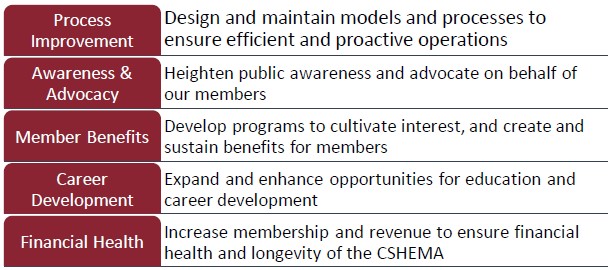
Strategies
- Process Improvement
-
Strategy Statement

Strategy Process:

Example Tactics:

- Awareness & Advocacy
-
Strategy Statement

Strategy Process:

Example Tactics:

- Member Benefits
-
Strategy Statement

Strategy Process:

Example Tactics:

- Career Development
-
Strategy Statement

Strategy Process:

Example Tactics:

- Financial Health
-
Strategy Statement

Strategy Process:

Example Tactics:

Benchmarking
CSHEMA provides survey and research services that help you improve environmental health and safety on campus.
Vital Statistics II Survey
Share your institutions key statistics!
The CSHEMA Research & Survey CoP’s Vital Statistics II Survey, earlier impacted by the COVID-19 pandemic, is now launched! Click below to access the survey.
Your participation in this initiative will provide CSHEMA member institutions the ability to objectively benchmark program staffing and budget, especially in the current operating environment.
Salary Survey
CSHEMA conducts the biannual Salary Survey in odd-numbered years; resuming in 2025. The survey allows comparison of EHS staff salaries for those who serve in similar roles.
This survey is only available to CSHEMA members. Those institutions who complete the survey will receive access to results for free.
Questions regarding this survey may be directed to This email address is being protected from spambots. You need JavaScript enabled to view it..
Benchmarking Survey
CSHEMA conducts the biannual Benchmarking Survey in even-numbered years; resuming in 2026. The survey collects and allows institutions to compare critical metrics in the areas of general safety, fire safety, biological safety, radiation safety, waste disposal, regulatory compliance, best practices, and more.
This survey is only available to CSHEMA members. Those institutions who complete the survey will receive access to results for free.
Questions regarding this survey may be directed to This email address is being protected from spambots. You need JavaScript enabled to view it..
Campus Climate Survey
In partnership with the University of Texas Health Science Center, CSHEMA offers the Campus Safety Climate Survey to help you better understand and measure the extent to which safety has been integrated on your campus. The survey not only allows you to assess your progress over time, but you also can benchmark against other institutions.
The Campus Climate Survey is customized to your campus. CSHEMA administers the survey and ensures data is kept confidential. Aggregated data is shared anonymously to allow for benchmarking.
There is no fee to participate. Contact This email address is being protected from spambots. You need JavaScript enabled to view it. to schedule a consultation appointment.